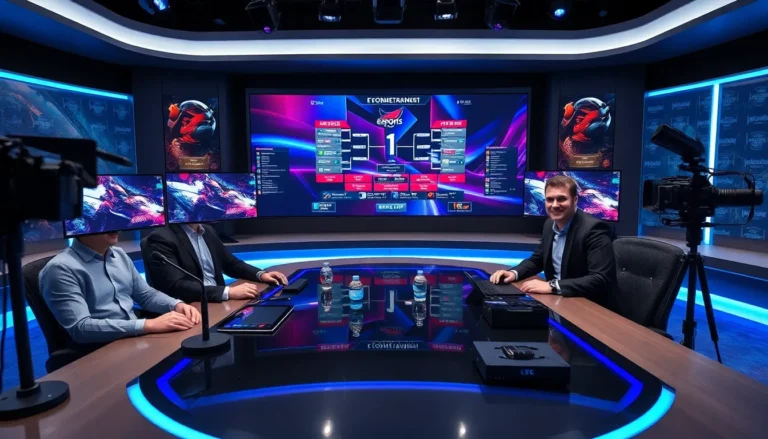
Esports coverage trends 2026 are reshaping how fans experience competitive gaming. The industry continues to grow at a rapid pace, with global audiences expected to surpass 640 million viewers by next year. Broadcasters, streaming platforms, and content creators are adapting their strategies to meet changing viewer expectations. This article examines the key esports coverage trends 2026 will bring, from immersive technologies to grassroots expansion. These shifts will define how audiences connect with their favorite games and players in the coming year.
Table of Contents
ToggleKey Takeaways
- Esports coverage trends 2026 will prioritize immersive VR and AR experiences that let fans feel present at major tournaments from anywhere in the world.
- AI-powered personalization is transforming broadcasts with customized highlights, multi-language commentary, and predictive analytics that boost viewer engagement.
- Mobile-first content now dominates esports consumption, with over 60% of viewers watching on smartphones through platforms like TikTok and Instagram Reels.
- Regional and grassroots esports coverage is expanding rapidly, with professional-quality broadcasts now reaching audiences in Southeast Asia, South America, and Africa.
- Second-screen experiences and social media integration are becoming standard, allowing fans to interact with polls, predictions, and companion apps during live events.
- Collegiate and amateur tournaments are gaining unprecedented visibility, creating clear pathways for emerging players and new fan communities.
The Rise of Immersive Viewing Experiences
Virtual reality and augmented reality are transforming esports coverage trends 2026 audiences will experience firsthand. Major tournament organizers are investing heavily in VR broadcast options. These allow viewers to feel like they’re sitting in the arena, even from thousands of miles away.
AR overlays are becoming standard in live streams. Viewers can see real-time stats, player health bars, and tactical information floating alongside the action. This technology bridges the gap between casual viewers and hardcore fans who crave deeper game analysis.
360-degree camera setups now capture entire arenas during major events. Fans can choose their viewing angle and follow specific players or team zones. This level of control was unthinkable just a few years ago.
The costs of VR headsets continue to drop, making immersive viewing accessible to more fans. Platforms like YouTube and Twitch have expanded their VR streaming capabilities. Some esports leagues now offer premium VR viewing packages as a new revenue stream.
This shift toward immersive experiences represents one of the most significant esports coverage trends 2026 will solidify. Production teams are hiring specialists in spatial audio and 3D graphics to enhance these broadcasts. The goal is simple: make viewers feel present at every major competition.
AI-Powered Personalization in Esports Broadcasting
Artificial intelligence is driving personalization across esports coverage trends 2026 will make mainstream. AI algorithms now analyze viewer preferences and serve customized content in real time. A fan watching a League of Legends match might see different highlight replays than another viewer watching the same stream.
AI-generated commentary is gaining traction for secondary language broadcasts. While human casters remain the gold standard, AI can provide play-by-play in dozens of languages simultaneously. This expands global reach without proportional cost increases.
Predictive analytics powered by machine learning give broadcasters new storytelling tools. Before a match even starts, AI can calculate win probabilities, identify key matchups, and highlight players to watch. This data enriches pre-game coverage and keeps audiences engaged.
Some platforms now use AI to generate personalized highlight reels after each tournament. Fans receive a compilation focused on their favorite teams and players. This feature increases viewer retention and encourages social sharing.
Chatbots enhanced by large language models answer viewer questions during live streams. These bots can explain game mechanics, provide player statistics, and even predict upcoming plays. The technology makes esports more accessible to newcomers who might otherwise feel lost.
Among esports coverage trends 2026 will push forward, AI personalization stands out for its immediate impact on viewer satisfaction. Broadcasters who adopt these tools early are seeing measurable gains in watch time and subscriber growth.
Mobile-First Coverage and Social Media Integration
Mobile viewing now accounts for over 60% of esports content consumption. This reality shapes esports coverage trends 2026 producers must embrace. Vertical video formats, once considered gimmicky, are now essential for reaching younger audiences.
TikTok and Instagram Reels have become primary discovery platforms for esports content. Clips from major tournaments often go viral on these apps before they trend on traditional streaming sites. Smart production teams now create mobile-optimized content alongside standard broadcasts.
Live streaming on mobile has improved dramatically. 5G networks provide stable, high-quality connections for viewers on the go. Fans can watch their favorite matches during commutes, lunch breaks, or anywhere with cellular service.
Social media integration goes beyond simple clip sharing. Platforms now enable live polls, predictions, and interactive features during broadcasts. Viewers can vote on MVP candidates or guess match outcomes directly within their social feeds.
Influencer partnerships amplify esports coverage trends 2026 audiences will encounter across multiple platforms. Pro players and popular streamers host watch parties that draw millions of concurrent viewers. These collaborative events blend official coverage with personality-driven commentary.
Second-screen experiences are becoming standard. Fans watch the main broadcast on one device while engaging with companion apps on another. These apps offer additional stats, chat rooms, and exclusive behind-the-scenes content.
Expanding Regional and Grassroots Coverage
Major esports coverage trends 2026 will highlight include increased attention to regional scenes. Broadcasters are recognizing that grassroots tournaments drive long-term fan engagement. These events create the next generation of pro players and dedicated viewers.
Regional leagues in Southeast Asia, South America, and Africa are receiving unprecedented investment. Production quality at these events now rivals what tier-one tournaments offered just three years ago. Local language broadcasts with professional casters are becoming standard.
Collegiate esports coverage has expanded significantly. University leagues attract viewers who follow their schools and discover competitive gaming through campus events. Networks are signing broadcast deals with collegiate esports organizations at increasing rates.
Community tournaments receive more visibility through platform partnerships. Twitch and YouTube have created dedicated spaces for amateur competitions. These programs help smaller events reach broader audiences and attract sponsors.
The esports coverage trends 2026 will cement include better pathways from grassroots to professional leagues. Broadcasters now follow promising players from their amateur days, building narratives that pay off when those players reach the top tier.
This expansion creates opportunities for local talent in production, casting, and management. The esports industry is becoming less centralized, with meaningful content emerging from every corner of the globe.